Yavapai County · Hazard Tree Checks
Hazard tree checks and arborist assessments in Prescott
Some trees announce they're about to fail. Most give quieter signs: a crack that opens a little wider each winter, mushrooms at the root flare, a lean that wasn't there last year, a dead top on the ponderosa over the garage. A hazard check is an hour with someone who knows what those signs mean in Yavapai County trees.
Call (928) 766-TREE and tell us which trees are worrying you and what's under them. We'll arrange a visit from a local tree company, and can ask for an ISA Certified Arborist when you need one, for example for a written report for an HOA, an insurer or a neighbor.
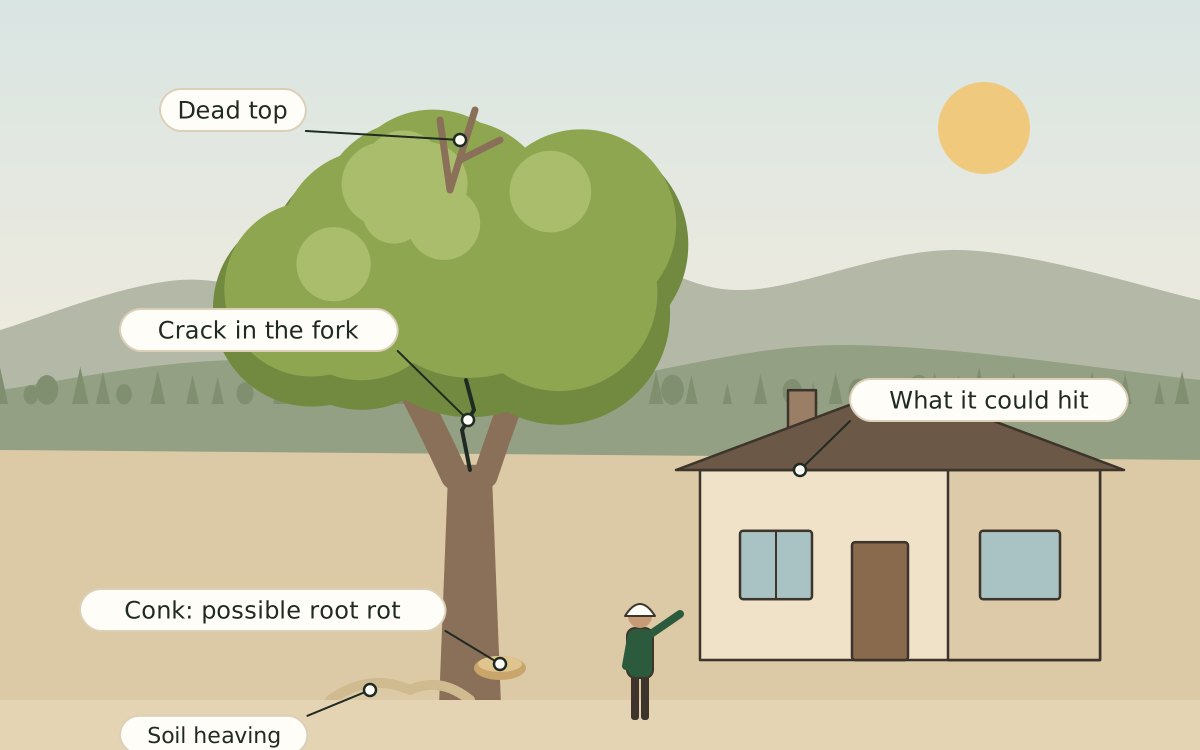
- Walk-around inspectionTrunk, root flare, crown and soil checked from the ground with binoculars and a mallet.
- Plain answersKeep it, prune it, watch it or remove it, with the reason for each.
- Written reportsAsk for a written assessment for an HOA, insurer, lender or neighbor.
- No pressurePlenty of checks end with 'this tree is fine.' That's a good result.
Warning signs worth a closer look
Watch for cracks in the trunk or where two trunks join, especially a tight V-shaped fork with bark pinched inside it. Mushrooms, conks or oozing near the base can mean root or butt rot. Soil heaving or cracking on one side of a leaning tree is serious. So are dead branches thicker than your wrist over a roof, driveway or play area, a sudden lean after a storm, and a pine whose top has gone thin or brown.
Species matters. Siberian elm and cottonwood are prone to limb failure because of brittle wood and weak branch unions. Old ponderosas can hide root rot. Ash trees in older Prescott yards often decline from the top down, and big alligator junipers are tough but can split at old trunk wounds. A good check reads the tree with that local knowledge, not a generic checklist.
What a tree risk assessment involves
Most checks are visual. The inspector walks around the tree, looks at the root flare and soil, sounds the trunk with a mallet for hollow spots, and studies the crown with binoculars for dead wood, cracks and weak unions. They also look at what the tree could hit, because risk depends on the target as much as the tree. A cracked limb over a woodpile is not the same as one over a bedroom.
Where decay is suspected deep inside the trunk, some arborists use tools like a resistance drill or sonic tomography. Those cost more and aren't needed for most home checks. Ask what level of assessment you're getting and whether anything comes in writing.
When to schedule one
The best times in the Prescott area are spring, before the monsoon winds arrive in July, and late fall, when deciduous trees are bare enough to show their structure. After any big storm or heavy wet snow, look again at the large trees closest to the house.
It's also worth a call before you buy a home with big trees near it, and before building an addition or driveway close to a mature tree, since root damage from construction often kills trees years later. The same goes when a neighbor's tree worries you: a neutral written assessment settles that conversation far better than an argument over the fence.
Why call this line
What you can count on
Licensed, insured
Every company we send holds an Arizona ROC license and liability insurance. Ask to see both.
Written quote first
A price in writing before work starts, with stump grinding and haul-off listed separately.
Local to the county
Crews based around Prescott and the Verde Valley who know the trees and the terrain.
Storm calls 24/7
Trees on homes, cars and driveways, any hour of the day or night.
Questions
Questions about hazard tree checks
Do I need a certified arborist?
For a quick opinion on whether a tree needs trimming or removal, an experienced tree company is usually fine. For a written report for an insurer, HOA, lender or dispute, ask for an ISA Certified Arborist, ideally one who holds the Tree Risk Assessment Qualification.
Is a hazard tree check free?
Some tree companies include a basic look with a quote for work. A detailed written assessment from an arborist is usually a paid service. We'll tell you which one you're getting when we book it.
What can I do about a neighbor's dangerous tree?
Talk to them first and share what you've noticed. If that goes nowhere, a written assessment from a neutral arborist documents the risk, which matters if the tree later fails onto your property.
Can a leaning tree be safe?
Yes. Many trees grow with a lean and are perfectly stable. A lean that's new, or that comes with heaving soil or root damage on the opposite side, needs attention right away.
Also available
Related tree work
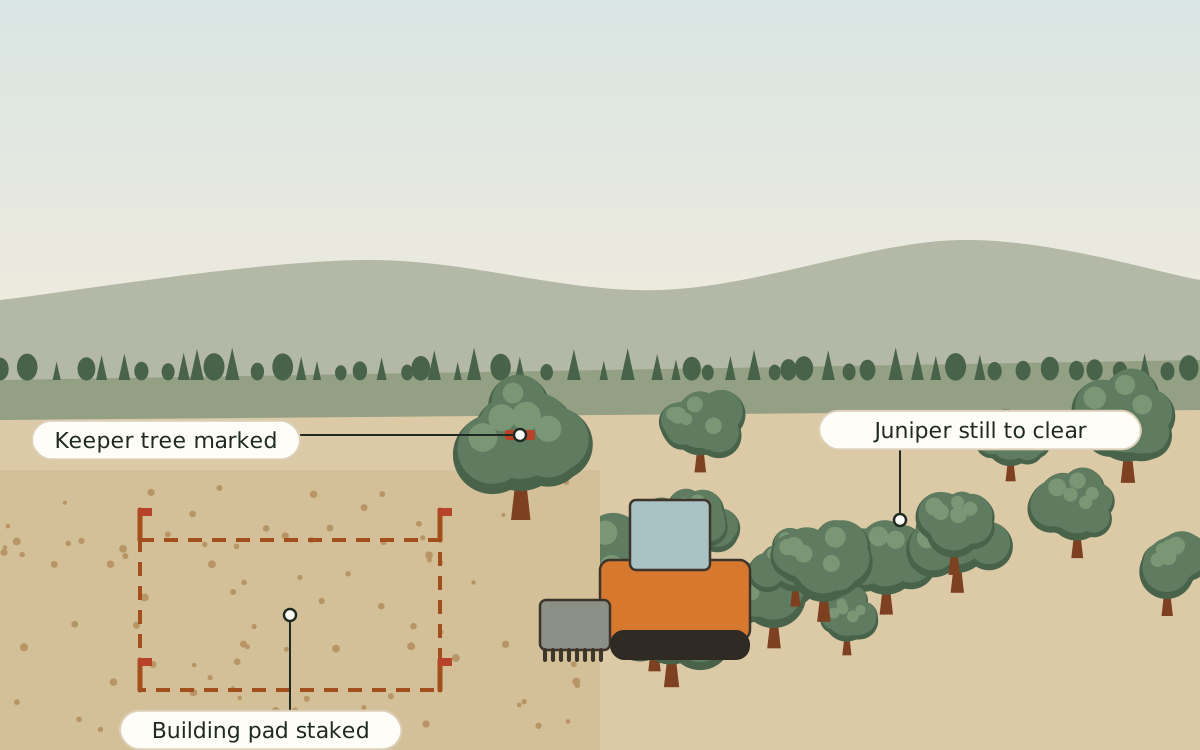
Lot Clearing
Juniper, scrub oak and pine thickets cleared for a build, a survey or a pasture, by hand or by mulcher.
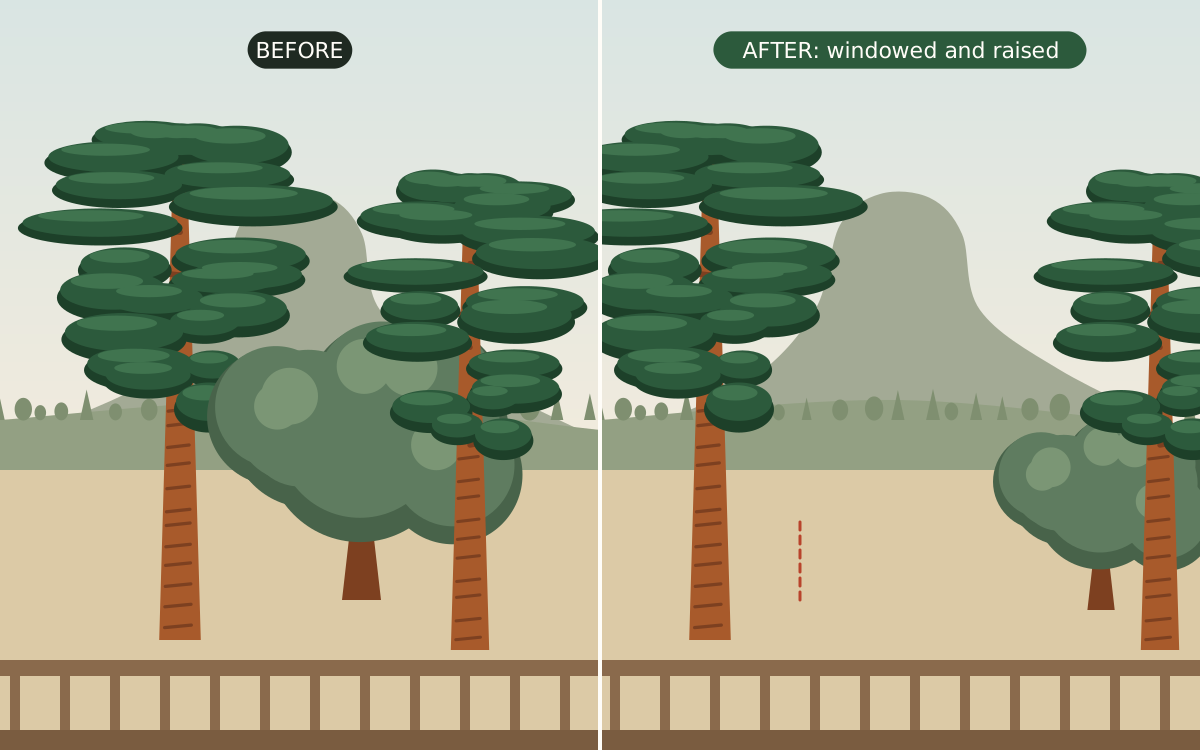
View Pruning
Thumb Butte, Mingus or the red rocks back in the window, without topping the trees that block them.
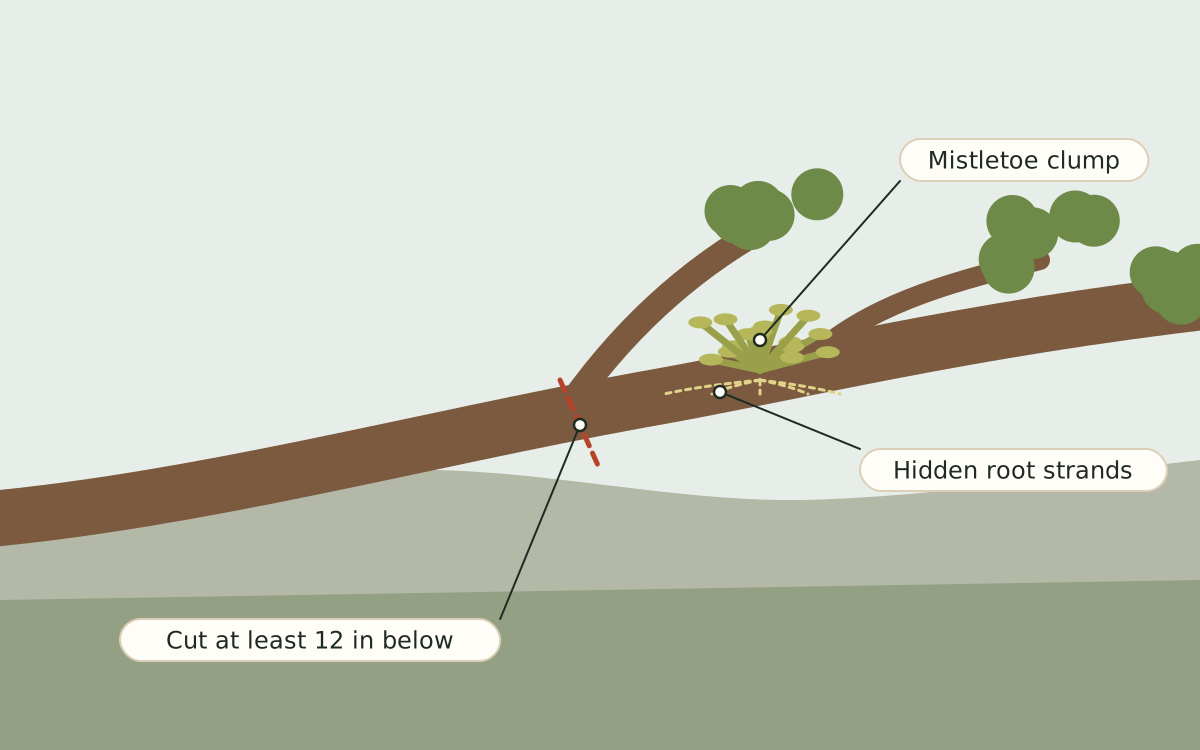
Mistletoe Removal
Juniper, desert and dwarf mistletoe cut out of junipers, mesquite, cottonwoods and pines.