October 20, 2026
Why Junipers Are Dying in Prescott
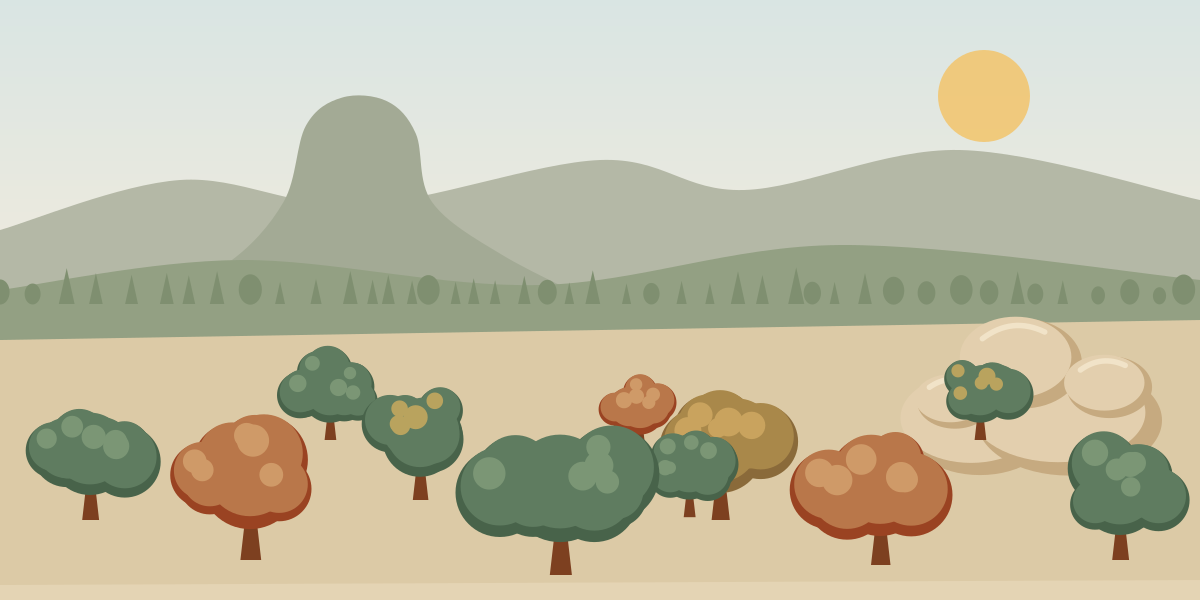
Drive out Williamson Valley Road, through Chino Valley or up toward Paulden in a dry year, and you’ll see them: patches of junipers gone rust brown in the middle of an otherwise green hillside. If one of them is in your yard, the first questions are what killed it, whether the ones around it are next, and whether it needs to come down.
What’s killing the junipers
Mostly, it’s drought. In 2025, University of Arizona extension staff in Yavapai County looked at dying junipers north of Prescott and found little sign of insects or disease. Drought was the most likely cause, and the hardest-hit trees tended to be smaller ones with shallow roots and trees on sun-baked south-facing slopes. Forest Service health specialists reached a similar conclusion about earlier juniper die-offs across the Prescott and Kaibab national forests: the initial cause was water stress.
Insects usually come second. Once a juniper or Arizona cypress is weakened by drought, bark beetles and flatheaded borers can move in and finish it off, and extension staff have found cypress bark beetles in stressed cypress and junipers around the county. This isn’t a disease that spreads from tree to tree, but beetles breeding in one dying tree can attack other stressed trees nearby.
Is your juniper dead or just stressed?
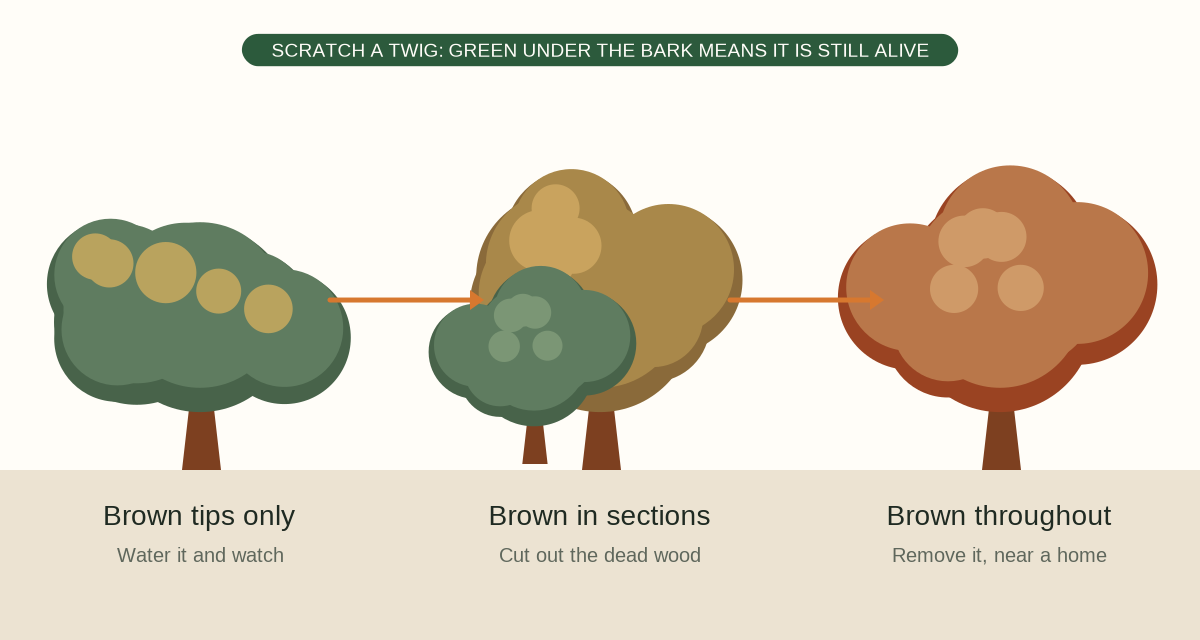
Drought-stressed junipers change color from the branch tips inward. Look at the whole tree, then do a quick test: bend a few twigs and scratch the bark with a fingernail. Green, moist tissue underneath means that part of the tree is still alive. Brown and dry means it’s gone.
- Brown tips, mostly green tree. Stressed but alive. This is the stage where water helps.
- Brown in sections. Junipers often lose a branch or a whole side and keep living on the rest. Cut the dead wood out and watch it through the next season.
- Brown throughout, nothing green under the bark. The tree is dead and won’t green back up, however much water it gets.
Don’t confuse drought damage with two things that look alarming but aren’t. Some browning deep inside the canopy is normal shedding of old foliage. And yellow-orange tufts in the branches are juniper mistletoe, a separate problem covered on our mistletoe removal page.
What to do, tree by tree
For stressed junipers you want to keep, water is the fix. During dry stretches, give the tree a slow, deep soak around the outer edge of its canopy once or twice a month, letting a hose or soaker line run on low for a few hours. A layer of wood chips over the root zone holds moisture, as long as it stays at least five feet from your house. Skip the fertilizer; pushing new growth on a drought-stressed tree makes things worse.
For partly dead junipers, cut the dead branches back to green wood or to the trunk. That removes dry fuel, makes the tree look better, and lets you see clearly next spring whether it’s recovering.
For dead junipers, take them out, especially anything within 30 feet of a building. A dead juniper by the house is one of the most flammable things on a Prescott-area lot. Out on open acreage, well away from structures and roads, a dead juniper can be left standing for birds and wildlife if it can’t fall on anything.
Dead junipers and wildfire
Juniper foliage is oily and burns hot even when it’s green. Once dead, it’s dry fuel that catches embers easily and can carry fire from the ground into nearby trees. That’s why junipers are usually the first thing to go in a defensible space project. The zones and spacing are covered in our defensible space guide.
If you have a lot of dead junipers across a larger property, clearing them in one pass with a mulcher is often cheaper than removing trees one at a time. See lot clearing for how that works.
What to do with the wood
Juniper makes good firewood once it’s seasoned. Stack it well away from the house and away from living junipers and cypress, in case beetles are still inside. If you don’t burn wood, have it chipped or hauled. Chips from beetle-infested trees shouldn’t be spread under healthy ones.
Should you replant?
If you replant, pick something suited to your elevation and water, and plan to water it deeply while it establishes, usually for the first two or three summers. Don’t plant a new juniper right against the house; keep fire-prone shrubs out of the first five feet. The Yavapai County Cooperative Extension office in Prescott, at (928) 445-6590, and local nurseries can suggest trees that cope with drought at your elevation.
Getting help
If you’re not sure whether a juniper can be saved, or you have dead ones near the house, call (928) 766-TREE. We’ll line up a licensed local crew to look at the trees, tell you honestly which ones to keep, and quote removal of the ones that need to go.
Common questions
Why are so many junipers dying in Yavapai County?
Drought is the main cause. University of Arizona extension staff who examined dying junipers north of Prescott in 2025 found no significant insects or disease and pointed to drought, and Forest Service health specialists have tied earlier die-offs to water stress. Bark beetles and borers often move into the weakened trees afterward.
Can a brown juniper come back?
A juniper with brown tips or one dead section can recover if the rest of the tree is green and it gets water. A juniper that has turned brown throughout, with no green under the bark of its twigs, is dead and won't come back.
Is a dead juniper a fire hazard?
Yes. Juniper foliage is oily and burns hot even when green, and a dead juniper is dry fuel that catches embers easily. Dead junipers within 30 feet of a home are a priority to remove.
Do I have to remove dead junipers on my property?
There's generally no rule that forces you to, though some HOAs and insurers ask about dead trees near homes. Dead junipers close to buildings should come out for fire safety. On open acreage well away from structures, a dead juniper can be left for wildlife.