October 20, 2026
Cottonwood Branch Drop: Verde Valley
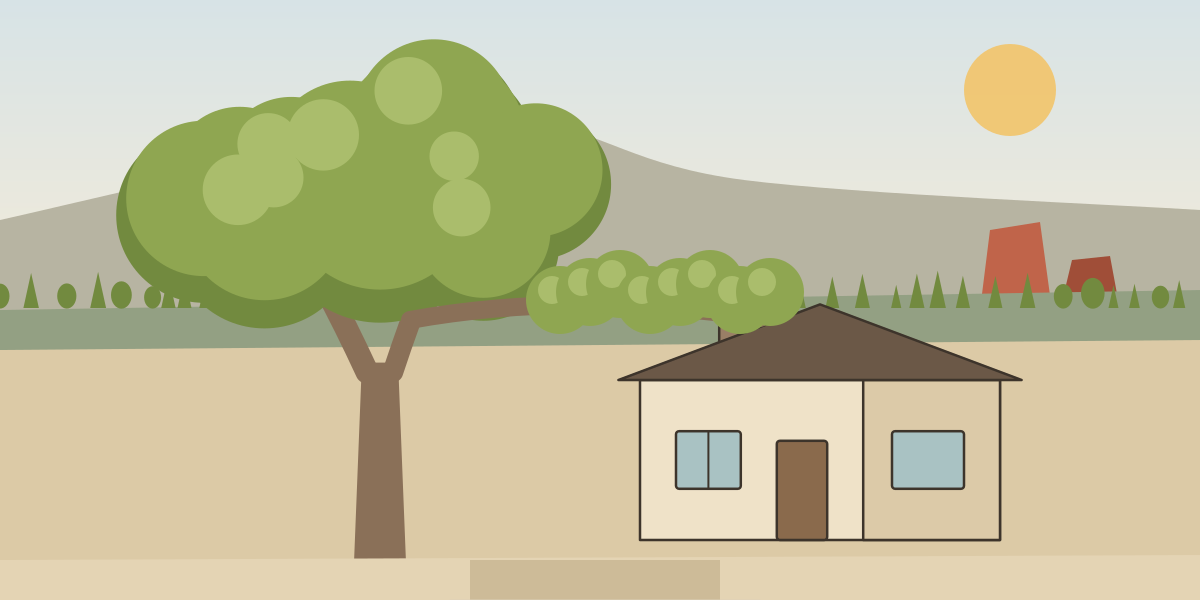
It happens on a still July afternoon in Cottonwood or Camp Verde. There’s no storm and no wind, just a loud crack, and a limb the size of a small tree is lying across the driveway. Arborists call this summer branch drop, and the big Fremont cottonwoods along the Verde River, Oak Creek and the irrigation ditches are among the trees best known for it.
If you have a mature cottonwood near your house in the Verde Valley, here’s what’s going on and what you can do about it.
What summer branch drop is
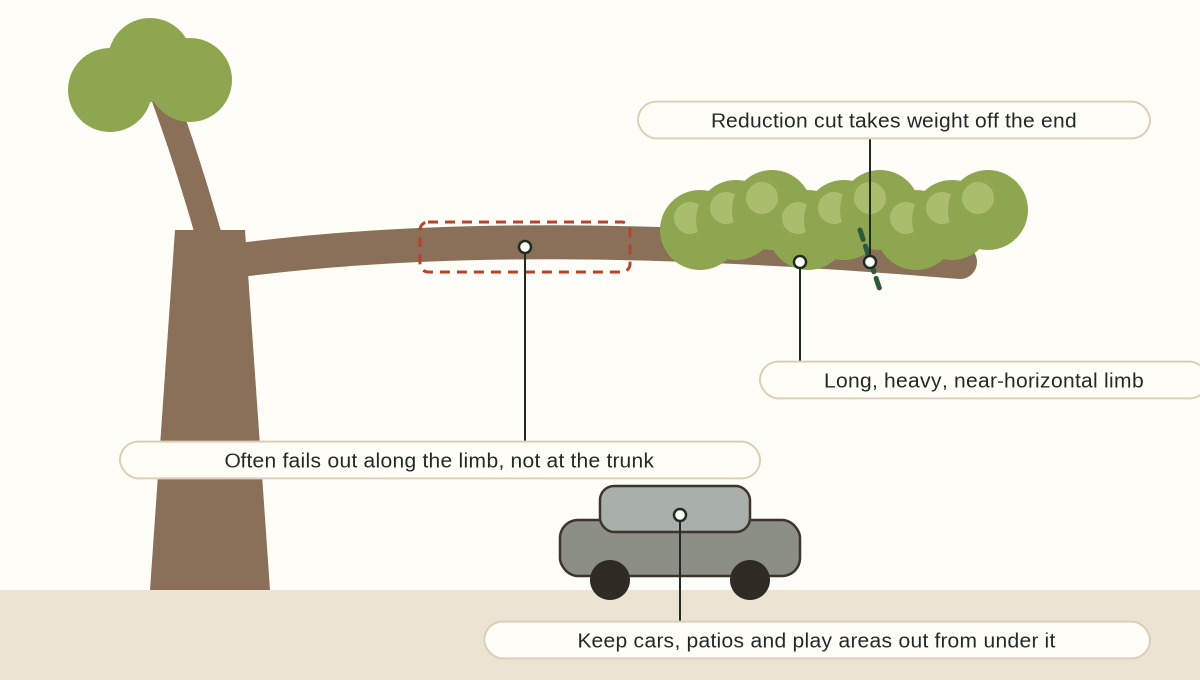
Summer branch drop is the sudden failure of a large limb on a hot, calm day, usually from a tree that looks perfectly healthy. The limbs that fail are typically long, heavy and close to horizontal, and they often break some distance out along the limb rather than right at the trunk.
Nobody has fully pinned down the cause. It’s associated with hot, dry weather and water stress, and some extension specialists have noted it can follow a heavy rain that ends a dry spell. What’s clear is that it happens most in fast-growing, weak-wooded trees with long limbs, which describes a riverside cottonwood exactly.
It’s worth separating this from something harmless. Cottonwoods routinely shed small twigs with leaves still attached, especially in summer and fall. Those twigs littering the lawn are normal. The concern is the big limbs.
Why Verde Valley cottonwoods are prone to it
Cottonwoods grow fast where they have water, and around Cottonwood, Clarkdale and Camp Verde, many of them sit on the river, a ditch or a well-watered lawn. Fast growth means long limbs built from light, weak wood, reaching out toward the sun and getting heavier at the tips every year. At around 3,300 feet, the Verde Valley also gets hotter summers than Prescott, and the hottest stretch, just before the monsoon arrives, is when trees are under the most water stress.
Changes in water add to it. A ditch that stops running, a lawn that’s no longer irrigated, or construction that cuts roots can all push a big cottonwood into stress. Many of the largest trees in Old Town Cottonwood, Verde Village and Clarkdale’s Upper Town were planted decades ago, close to homes that have grown up around them.
Warning signs to look for
Summer branch drop can strike a limb with no visible defect, so you can’t predict every failure. But some trees and limbs are clearly higher risk:
- Long, horizontal limbs reaching well beyond the rest of the canopy, with most of their leaves bunched at the end
- A history of dropped limbs. A tree that has shed one big limb often has others shaped just like it, so check the whole canopy.
- Cracks, cavities or decay, especially where limbs join the trunk
- Mushrooms or conks at the base or on the trunk, which can mean internal rot
- Large dead branches in the crown
- Two trunks of similar size growing from a tight V with bark pinched between them
If any of those describe a limb over your house, driveway or patio, have it looked at. A hazard tree check is quicker and cheaper than a new roof.
How to make a cottonwood safer
Shorten the long limbs. The most effective step is reduction pruning: cutting long, end-heavy limbs back to a strong side branch, which takes weight off the tip and shortens the lever. This is not topping. Done properly, the tree keeps its shape and its shade. See our tree trimming page for what proper reduction cuts look like.
Support weak forks. Where two big trunks split from a tight V, a cable installed high in the crown can limit how far they move apart. Our cabling and bracing page explains when that makes sense.
Keep watering steady. If your cottonwood depends on irrigation, keep deep watering consistent through the summer instead of letting it swing between soaked and bone dry.
Change what’s underneath. The cheapest risk reduction is moving the target. In summer, don’t park under the longest limbs, and keep patios, hammocks and play sets out from under them.
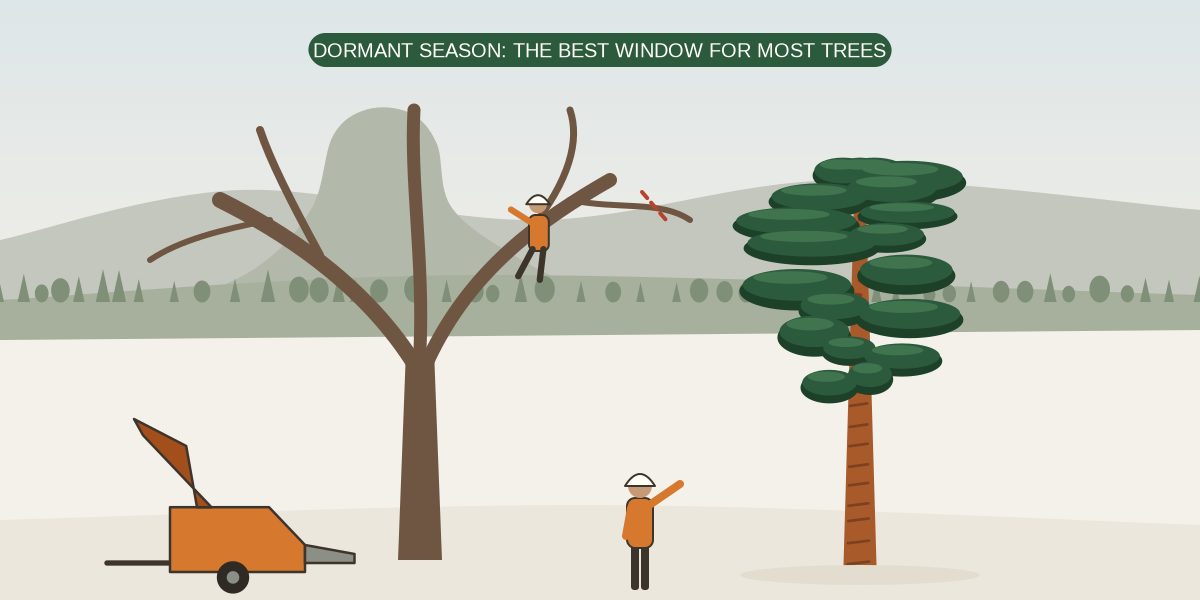
Prune at the right time. Major pruning on a cottonwood is best done in late winter while the tree is dormant. Our guide on when to trim trees in Prescott has the month-by-month calendar.
When removal is the right call
Sometimes a cottonwood has simply outgrown its spot. Extensive decay in the trunk, repeated large limb failures, or a big tree with poor structure leaning over a bedroom are all reasons to consider removal. Taking down a large cottonwood near a house usually means climbing and rigging it down in sections, and sometimes a crane, so expect a full day’s work. Near the river, crews also check for active nests in spring and schedule around them. Our tree removal page covers how that’s priced.
If a limb has already come down
Keep everyone clear of the tree. Big cottonwood limbs sometimes break partway and hang in the canopy, and a hanging limb can fall without warning. Stay away from any wires, take photos for insurance, and call (928) 766-TREE. Calls are taken 24 hours a day, and we’ll line up a licensed crew that works the Verde Valley. For more on what happens next, see emergency tree service.
Common questions
Why do cottonwood trees drop branches with no wind?
It's known as summer branch drop. Large, healthy-looking limbs fail on hot, calm days, often in the afternoon. The cause isn't fully understood, but it's linked to water stress in hot weather and tends to hit long, heavy, horizontal limbs on fast-growing trees like cottonwoods.
Is a cottonwood that dropped a limb going to drop more?
It may. A tree that has shed one big limb often has others with the same long, end-heavy shape. Have the rest of the canopy looked at, especially limbs over the house, the driveway or a patio.
How do you prevent cottonwood branch drop?
You can't prevent it entirely, but you can lower the risk. Shorten long, end-heavy limbs with reduction cuts, keep watering steady through the summer if the tree is irrigated, and keep cars, patios and play areas out from under the longest limbs.
When is the best time to prune a cottonwood?
Late winter, from December through February, while the tree is dormant and its structure is easy to see. Dead or cracked limbs over a target should come out whenever you notice them.